Research & Speculation
Inkido — Haptic Suit
A conceptual wearable that lets designers feel touch, weight and material resistance inside VR and AR — bringing the physicality of the model back into the digital process.
- Year
- 2018
- Role
- Concept & Industrial Designer
- Office
- Master Class Studio — Fontys
- Domain
- Industrial Design · UX · Wearable Technology
Named after a craftsman
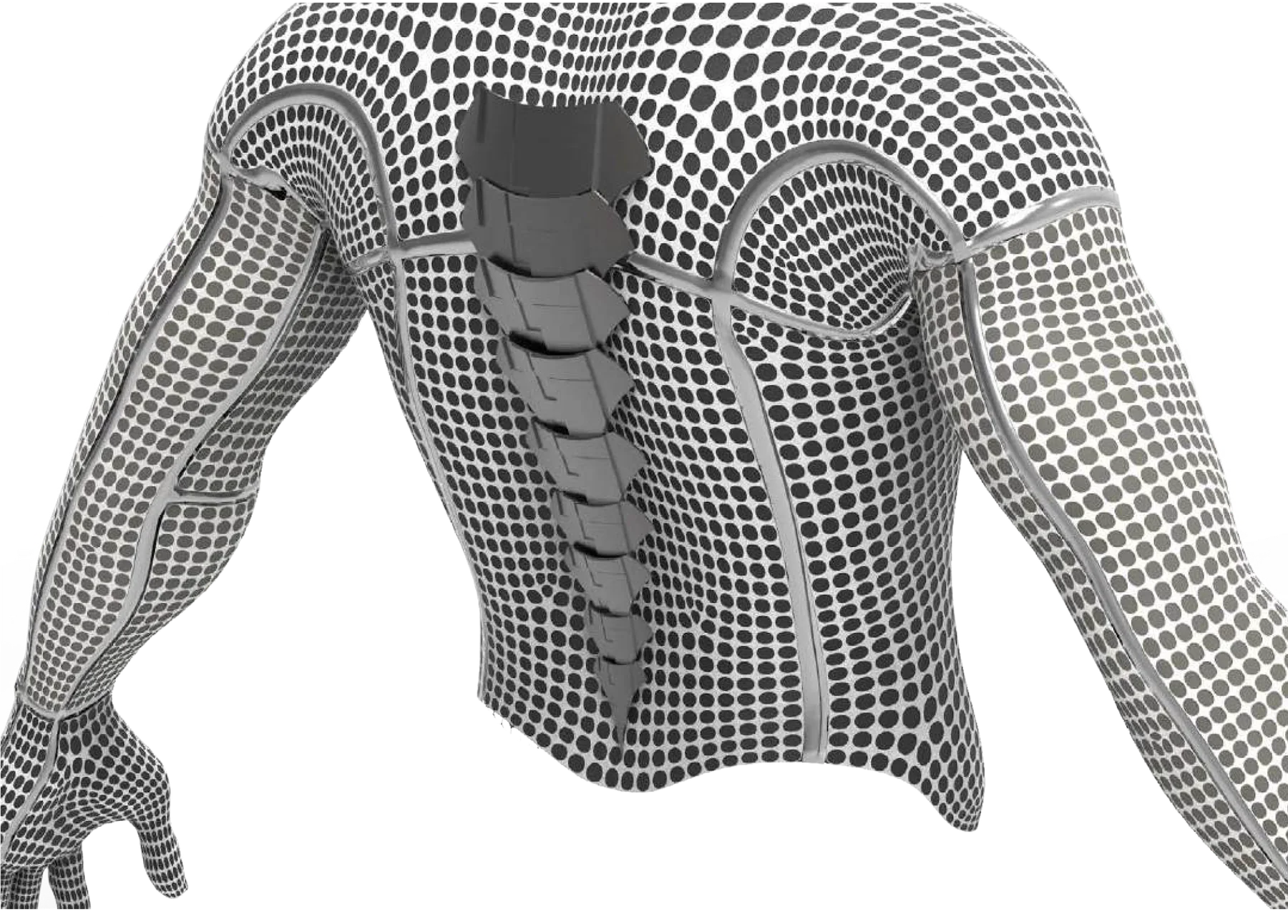
Architects and designers need to handle materials and physical models to understand them — a process that is slow, material-hungry, and hard to repeat. Virtual simulation should solve that, but current methods lack the tactile feedback needed to make the experience real: you can see a model in VR, you simply cannot feel it.
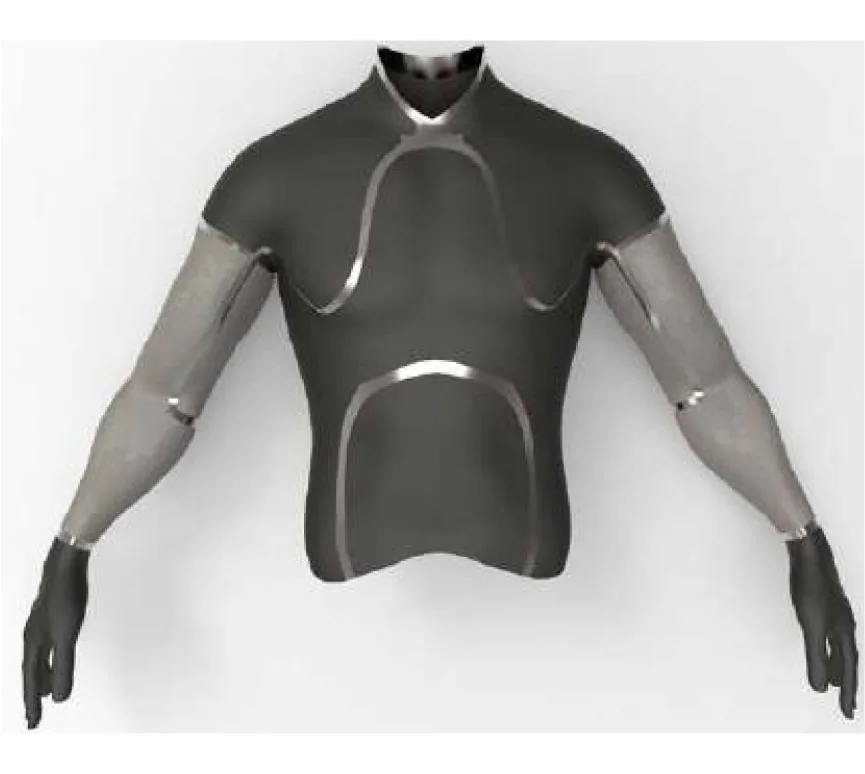
Inkido takes its name from Enkidu, the Sumerian patron god of artisans and craftsmen. The premise is to bring physicality into the digital realm — a garment that lets the hand believe what the eye is being shown.
Fibers that behave like muscles
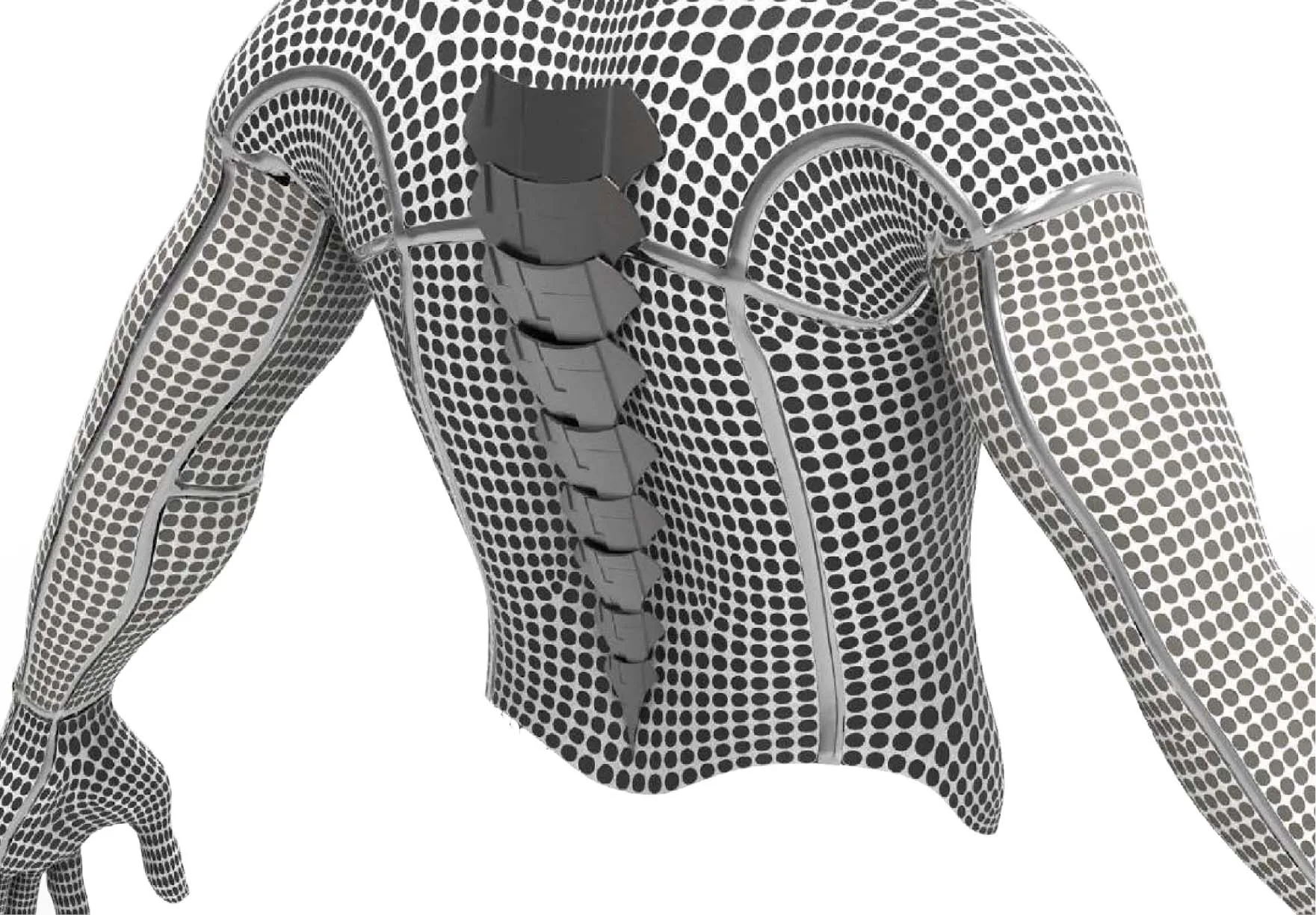
The suit works through a lattice of carbon fibers woven into the garment. Each fiber flexes or extends individually depending on the electric current passing through it. The middle layer holds intersecting bundles of these fibers, which act like muscles — contracting and relaxing on command.
By controlling the sequence and amplitude of those contractions in sync with what the VR environment displays, the suit can simulate the sensation of touch, weight, and material resistance. A main processor housed along the spine communicates with the user's VR/AR gear, bridging the virtual and physical worlds.
Eight layers, one garment
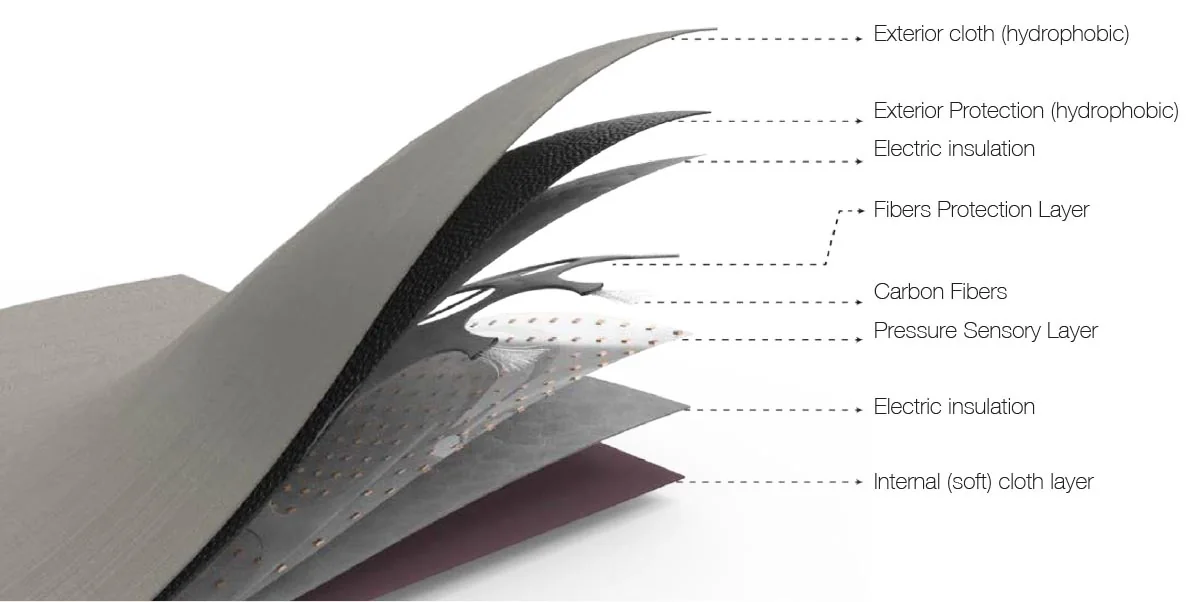
The layer stack is designed to maximize freedom of movement while protecting both the wearer and the electronics, and to survive repeated use. From the skin outward: an internal soft cloth layer, electric insulation, the pressure sensory layer, the carbon fibers themselves, a fiber protection layer, a second electric insulation, hydrophobic exterior protection, and a hydrophobic exterior cloth.
Memory Alpha — the modular spine
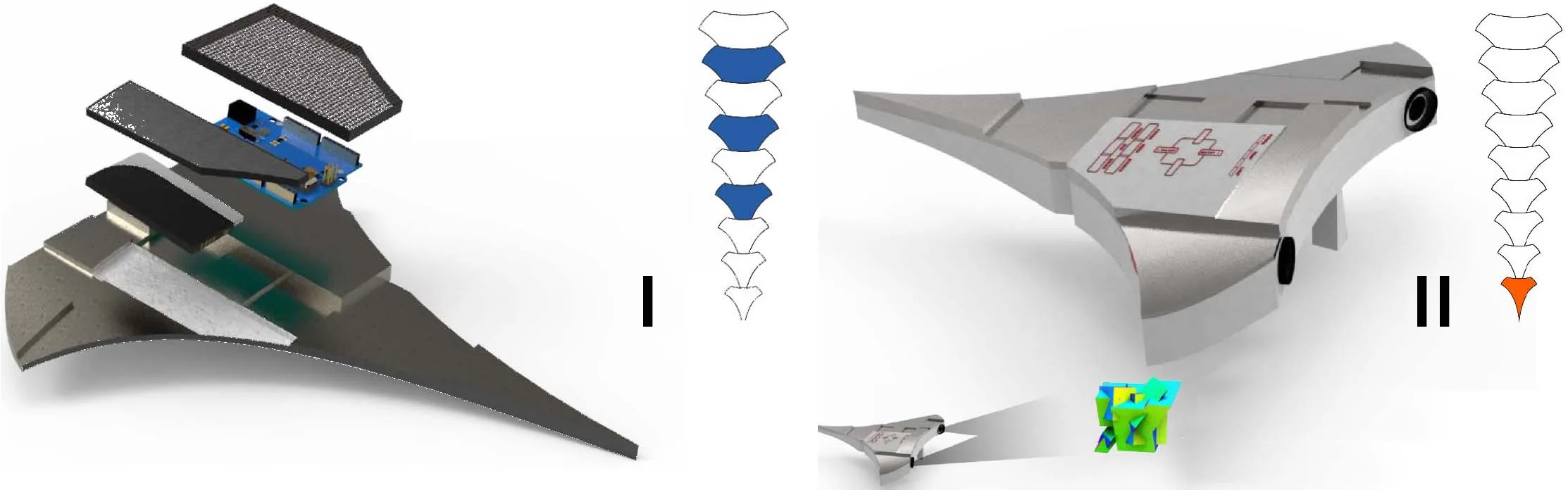
The spine element, Memory Alpha, is the suit's brain and backbone. It houses the processor, the power source, and the communication units, and it is deliberately modular — segments can be swapped to upgrade or extend the suit's capabilities rather than replacing the whole garment.
Its detachable bottom piece has a second life: removed from the suit, it works as a holographic projector for presentations, or whenever the AR gear is not in use.
Tested at the scale of a hand
Before the full garment, the principle was worked out at glove scale — fiber bundles threaded by hand through fabric, 3D-printed housings for the electronics, and layered textile samples to find a stack that stayed flexible. Building it physically is what turned the concept from a render into something with tolerances, failure points, and a feel.

Beyond the drawing board
Though conceived for design work — rapid modeling and 3D design — the same actuation principle reaches further: sports training and physical therapy, where guided resistance matters, and gaming and entertainment, where presence is the whole point.
Next project
Operation Desert Dijk