Research & Speculation
Forest of Latexological Order
An artistic research project exploring latex as a living architectural material — a structure that anticipates the forces of nature and integrates them constructively into its lifecycle.
- Year
- 2018
- Role
- Master Class Studio
- Office
- Fontys Academy of Architecture
- Domain
- Architecture · Material & Ecological Study
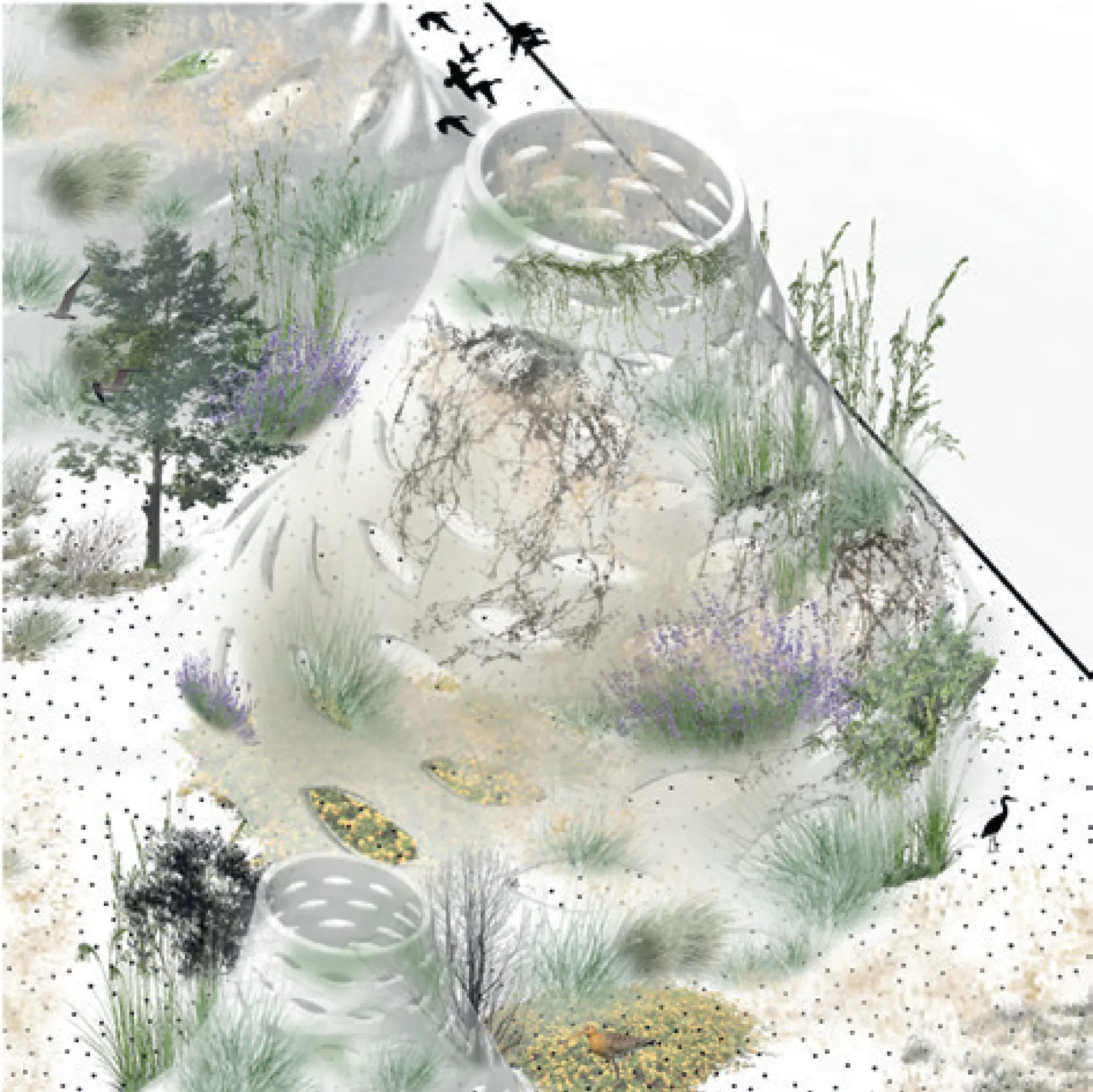
What if a building didn't need saving?
Almost everything we make, buildings most of all, is designed to hold aging off. It rarely works: the object is either discarded early or kept alive by increasingly heavy cosmetic surgery. So we asked the opposite question — what if a building were designed not to be saved from time, but to grow and morph through it, moving between life stages like something living?
To make that possible we restricted the palette to organic, biodegradable substances and to living elements: seeds, spores, growing media. Working with nature means giving up control over the outcome, so we treated unpredictability as part of the brief and left room for the building to surprise us.
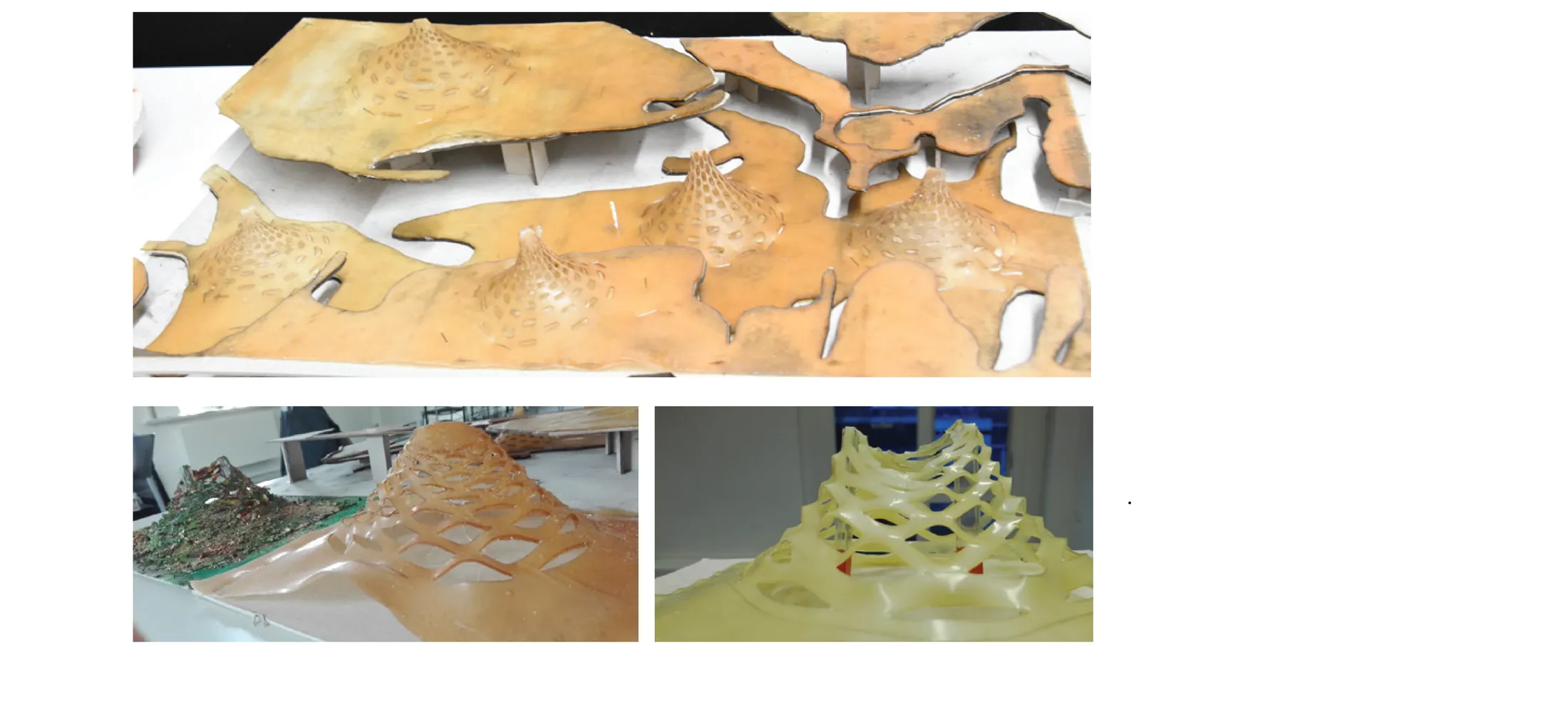
Decay into permanence
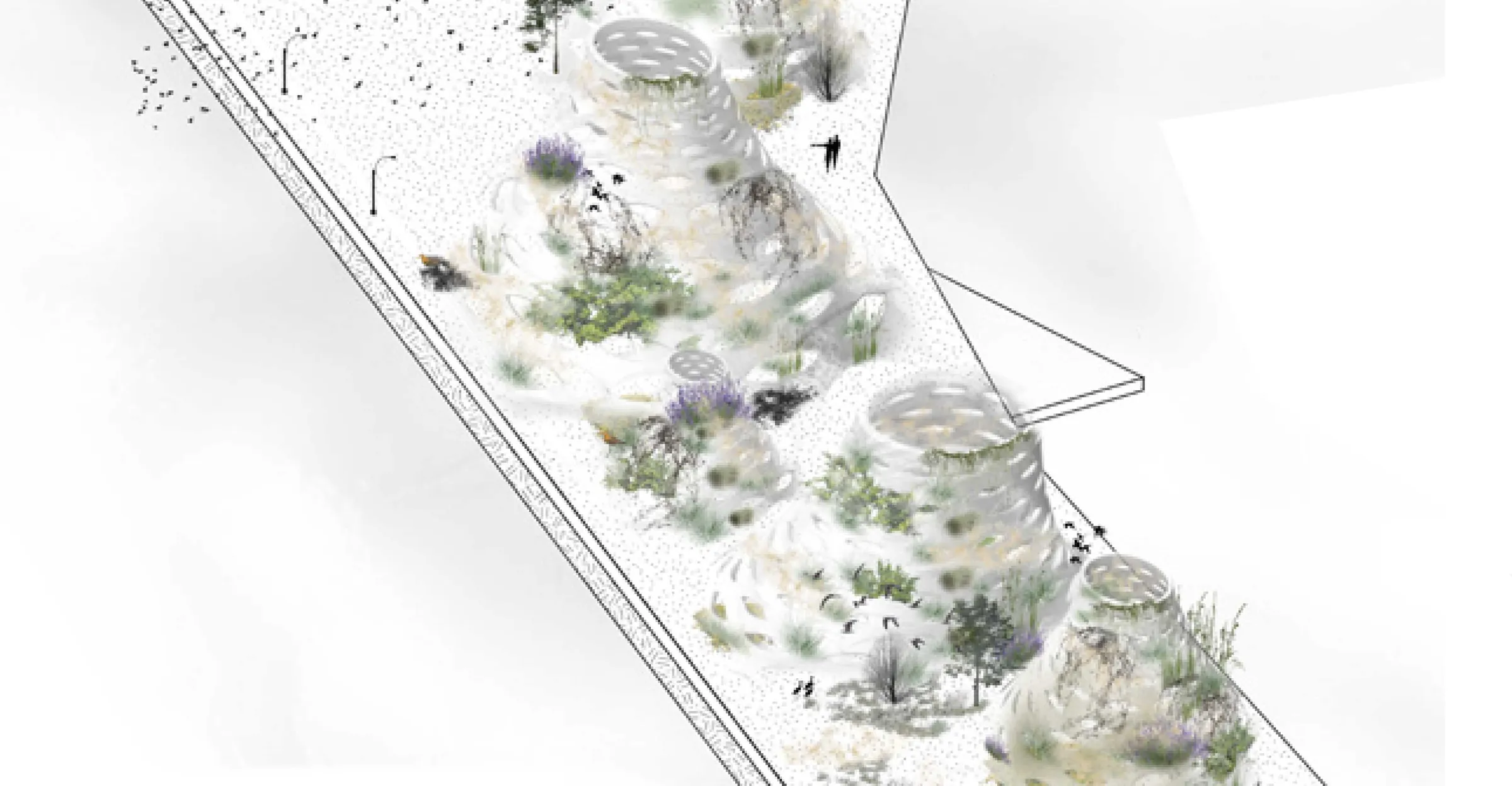
The latex sheets are infused with bundles of fibre, and each bundle is layered with seeds of varied flora and with mushroom spores. While the latex holds, nothing happens. As it wears and the weather seeps in, those dormant lifeforms wake up and start to grow along the fibres.
The organic matter catches dust and sand as it spreads, and the form slowly stiffens where it was once soft. What begins as delicate decay ends as permanence — a living structure that becomes more resilient the longer it is left alone.
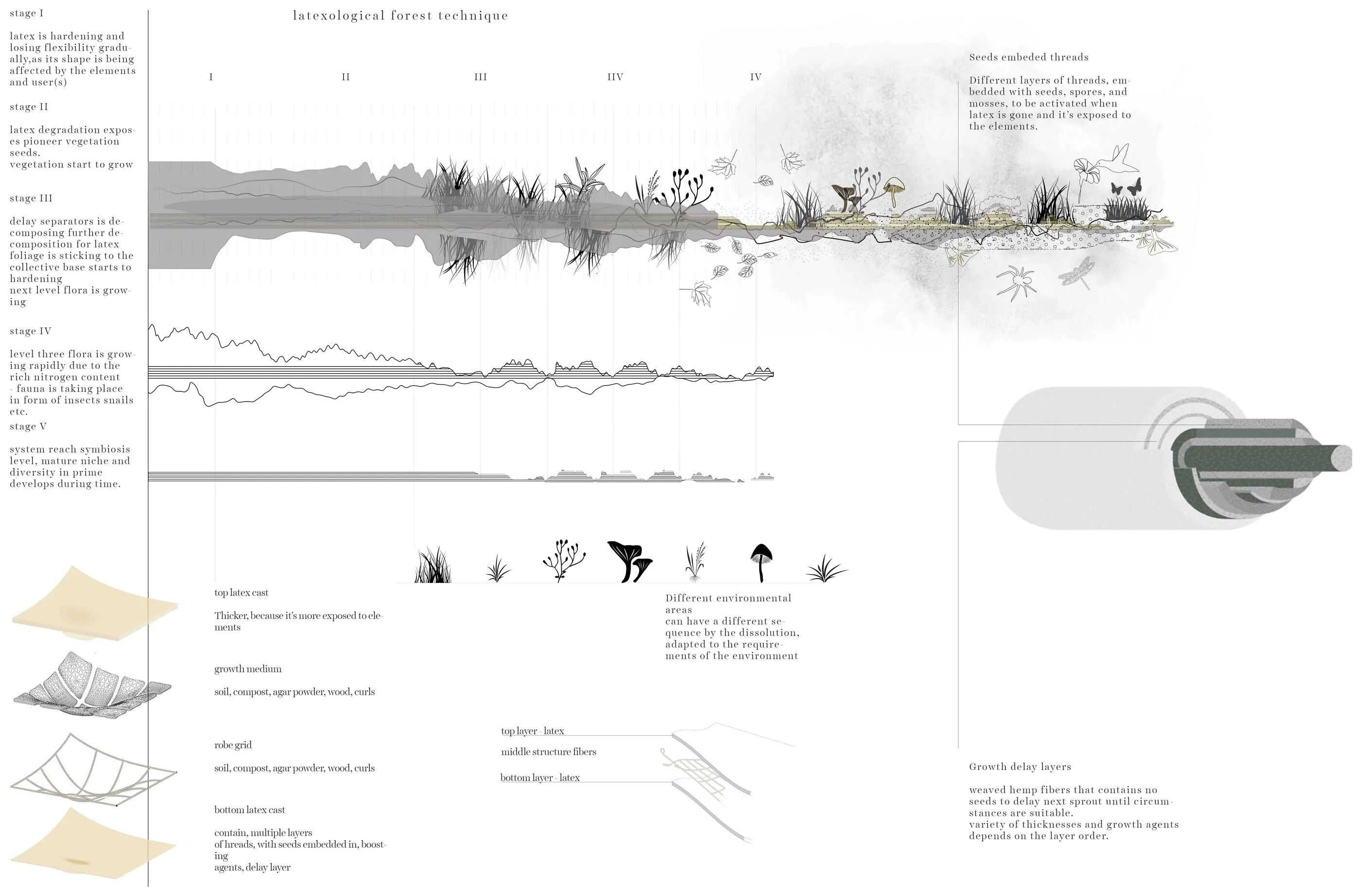
Seeded skins
The material research ran in parallel with the design: fibre bundles pulled through latex, seeds and spores embedded at different densities, samples left to weather and watched. Some sheets held their tension for months; others colonised within weeks.
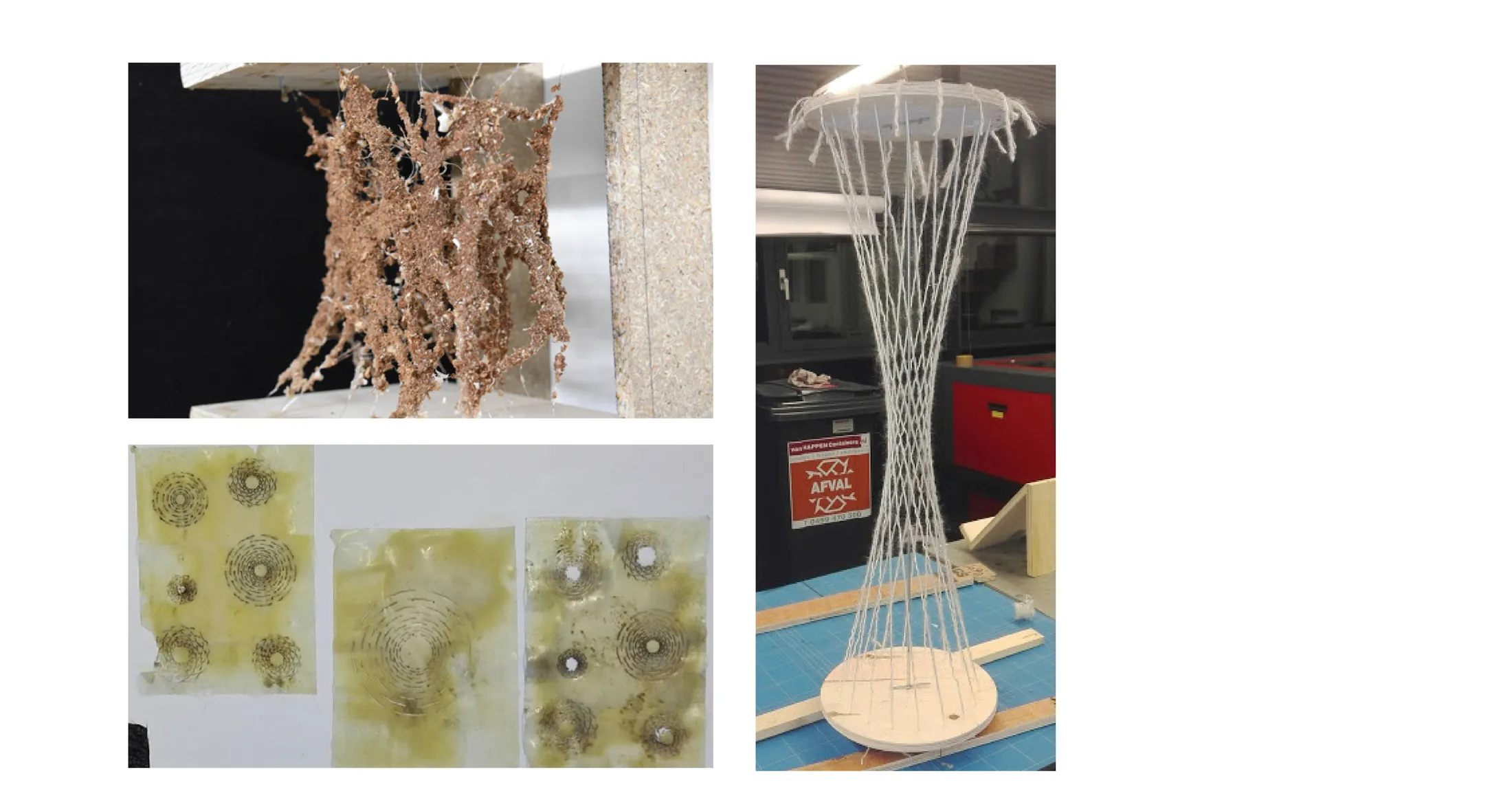
In search of the craft
For this project I stepped away from the digital entirely and worked analog. My hands were the tools; the method was to shape natural material and then let it argue back. Every piece turned into a conversation between the material and me — a study that became, more than anything I had done, a dance between art and nature.
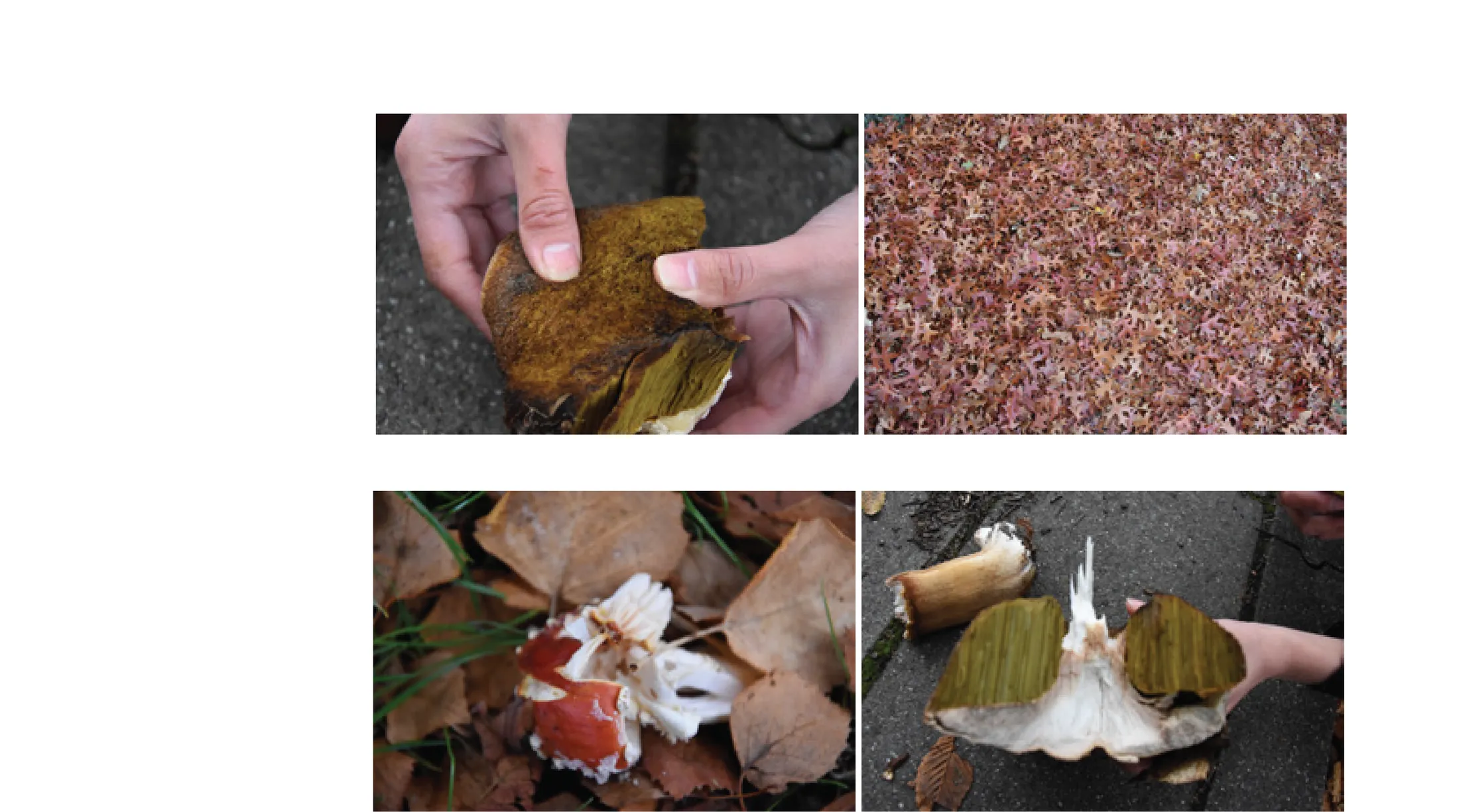
Foraging as research
Much of the knowledge came from collecting rather than making: bark, fungi, seed heads, husks — noted, drawn, and tested for how they attach, how they peel, how they hold water. The sketchbook was the instrument.
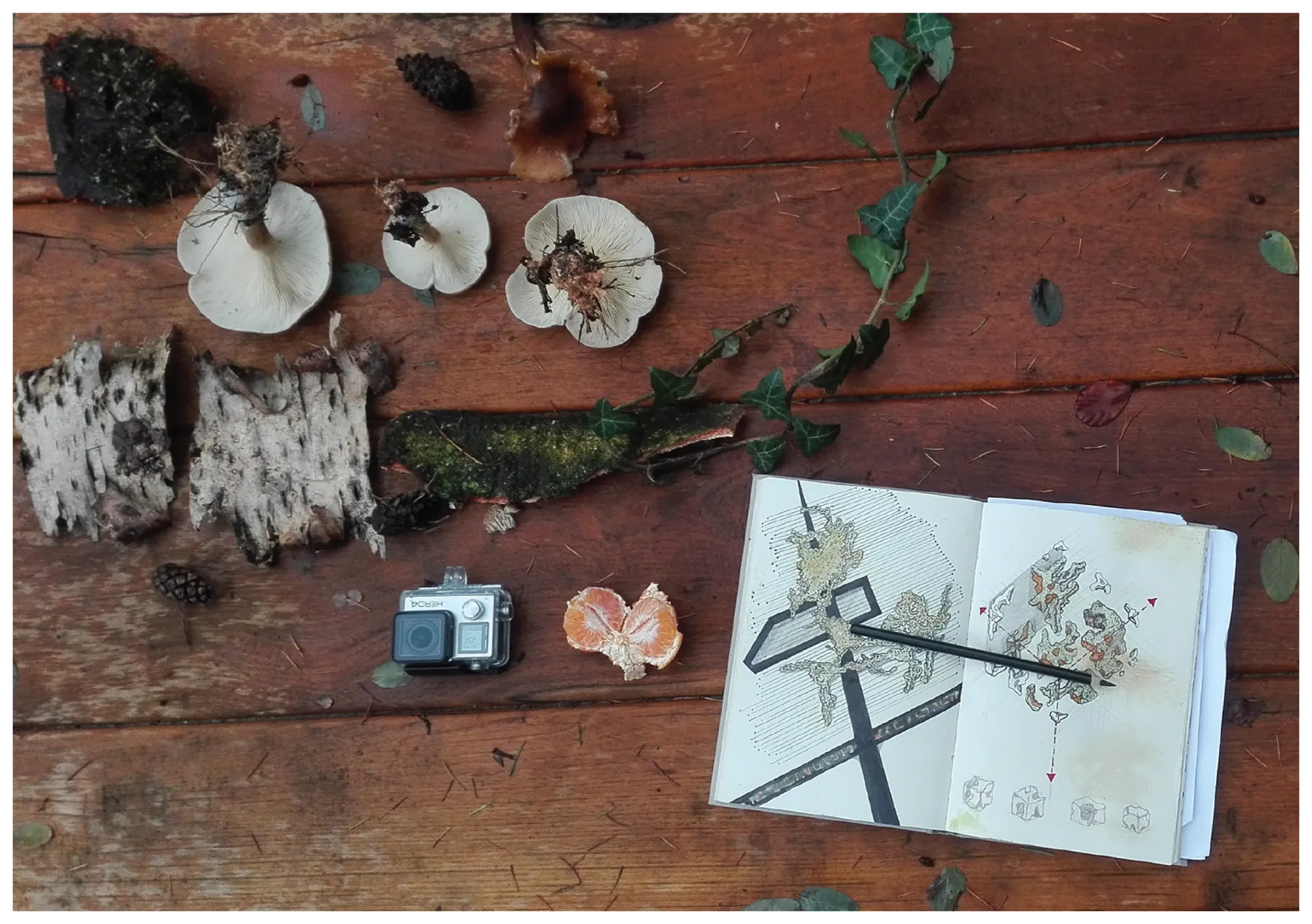
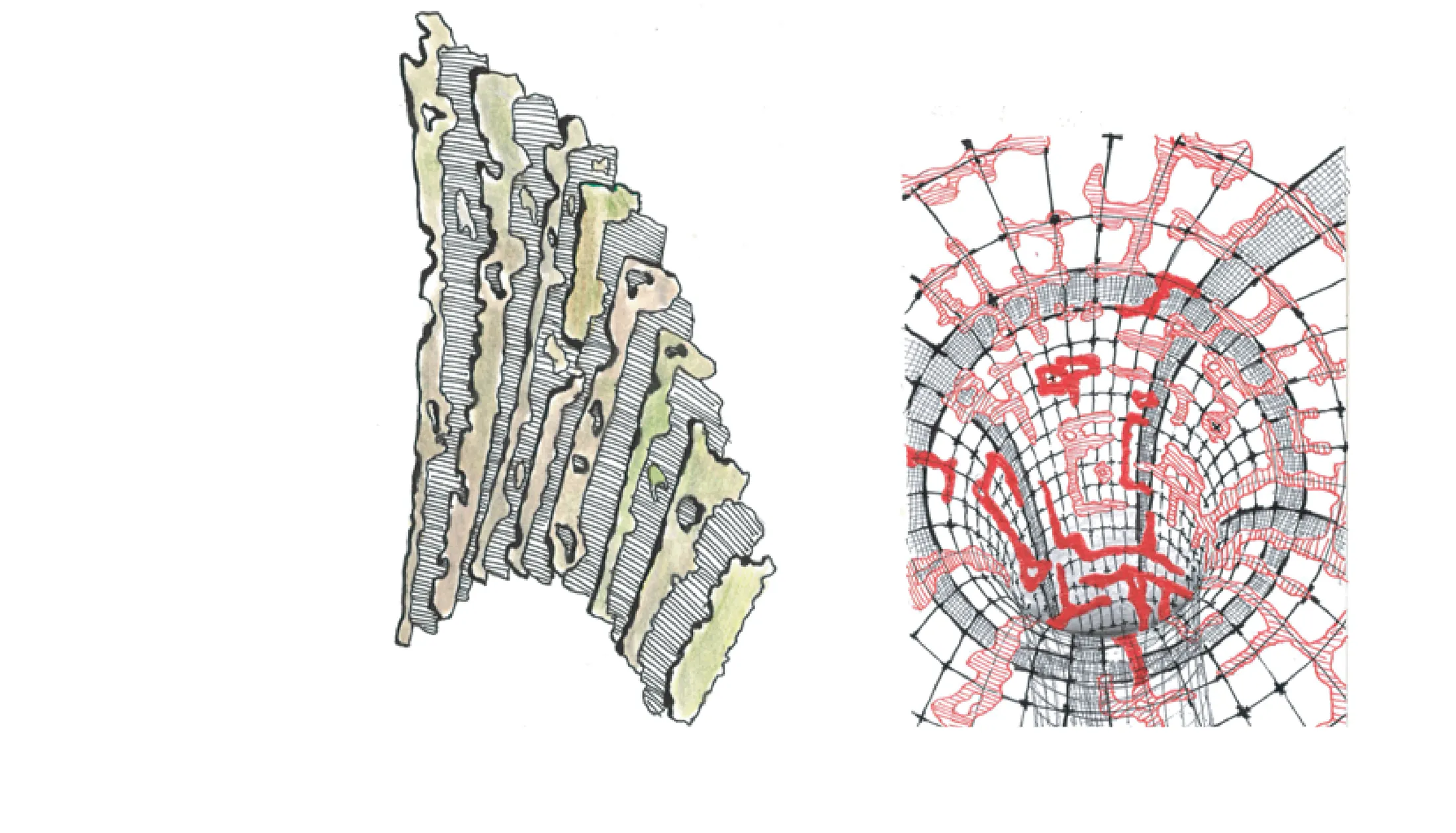
Drawing what grows
Drawing the structure meant drawing two things at once: the geometry that gets built, and the biology that arrives afterwards. The studies pair the fibre layout with the growth pattern it is meant to invite.
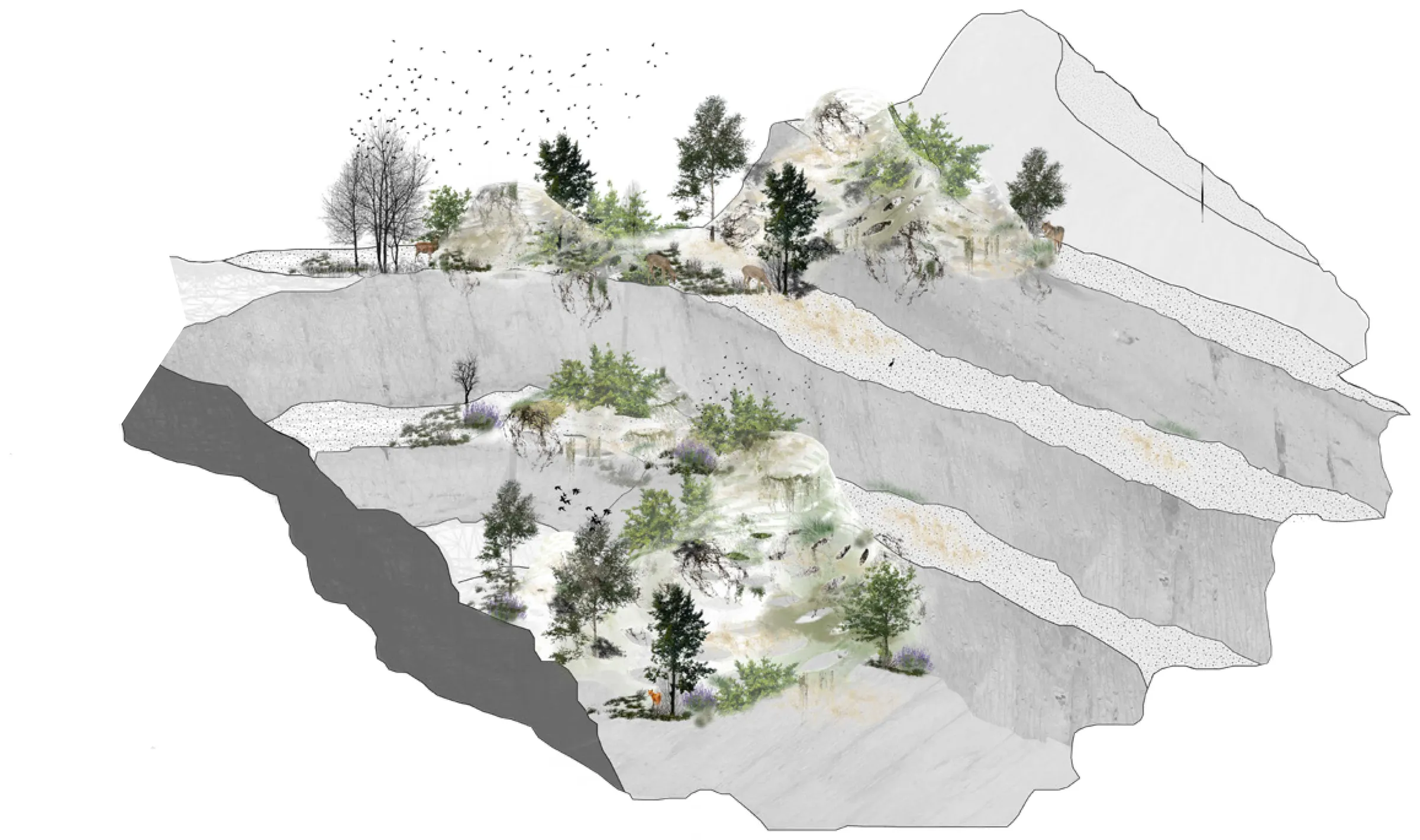
Site I — an abandoned mine
The first proposed site is a disused mining area in west Germany where the ecosystem has been stripped and the land left barren. Here the structure works as a starter culture: it encourages vegetation, which draws insects and fungi, which eventually draws small animals that begin to use the solidifying form for shelter.
Site II — a playground
The second site is urban, chosen to test the design against a different natural agent: people. Implemented as a playground, its primary users are children — which is to say the most inventive, least careful force we could hand it to — and the question is how form and material evolve under that kind of contact.
Next project
Common Woods